

Lately I’ve been doing a lot of cooking on cast iron. Not just for the way it sears or holds heat, but because of how it forces me to be in the moment. I have to take time to preheat and pay attention to the sounds, sights, and smells to manage the temperature.
So far, I’ve been using my two modern Lodge skillets, but last weekend I stumbled across a late-period era Wagner at an antique shop. Probably from the 60s or early 70s. Not quite vintage, but older than I.
It wasn't in bad shape. No warping, no cracks. Just decades of carbon and old seasoning built up in uneven layers. Just rough and dark and a little neglected looking.
Someone had loved that pan.


There’s a whole process for restoring a pan like that: lye bath or Easy Off with the yellow cap and a day in a garbage bag to release the old carbon and seasoning, a good scrub, maybe a vinegar bath for rust. Followed by a good wash with soap and water, a towel dry, and a spell on the burner to completely dry things out and open the pores in the iron.
That’s all procedure. Written and repeatable.
What was unexpected, and what struck me, was the look of the bare iron.
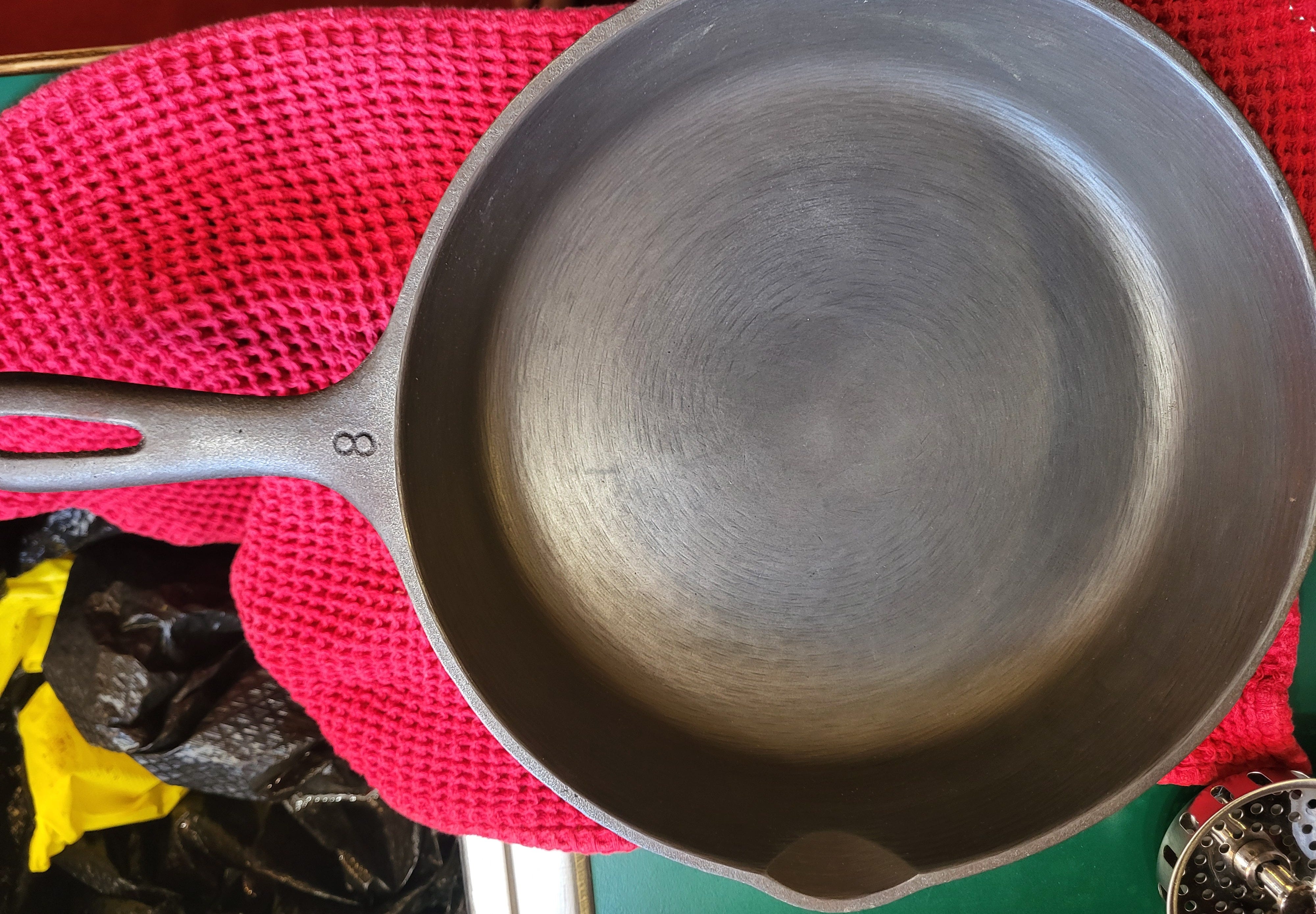
Specifically the circular tooling marks from the craftsperson who pulled that skillet out of its sandy mold, hooked it to a lathe, and expertly machined it to a smooth finish. That’s something you don’t see in modern skillets. That’s a direct connection from that person’s labor, though the stovetops, ovens, and campfires of the last 60 years, and into my care where I can pass it along someday.
It’s been through three rounds of seasoning now and even cooked its first cornbread. Eventually I may not be able so see it, but I’ll know that fingerprint left by the lathe is there, proof of the care that goes into crafting something designed to endure.